Netily: the ISP billing system we built, own and run.
When a subscriber pays, they should be back online without anyone touching a router. That one idea is now used by 50+ ISPs.
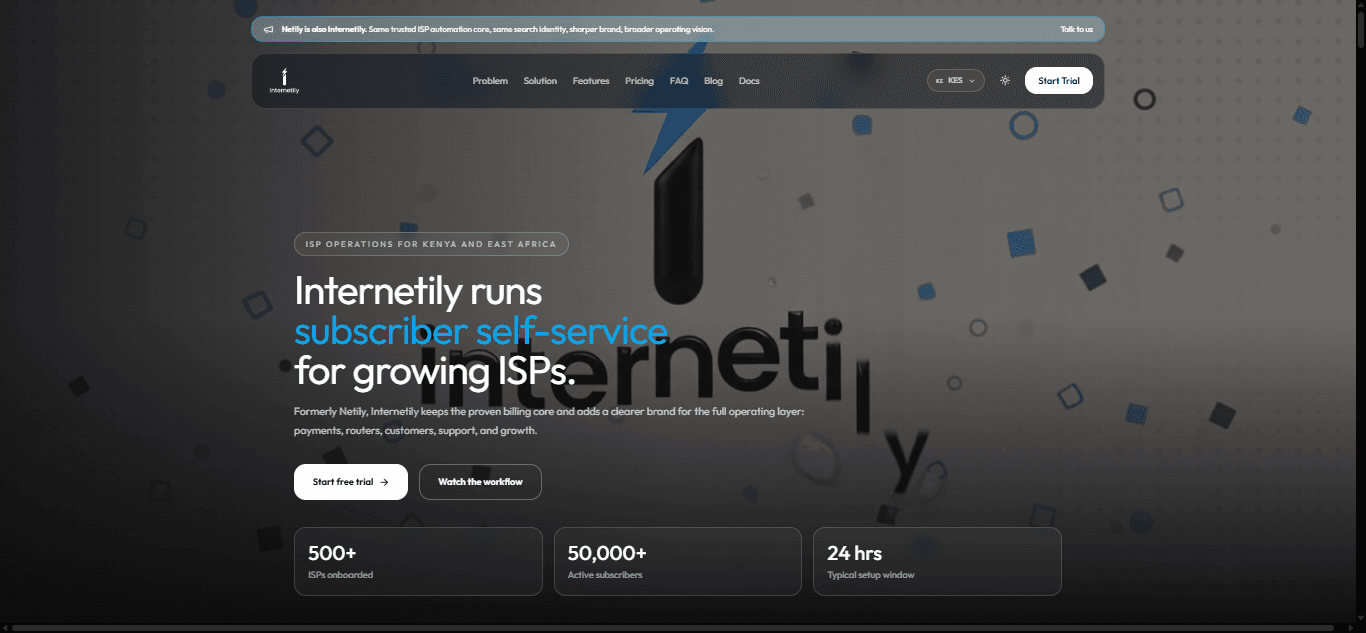
Netily is Mjengo Corporate's ISP billing system for MikroTik PPPoE and hotspot networks. When a subscriber pays by M-Pesa, Netily matches the payment and switches their internet back on automatically, with no router login and no manual unblocking. It launched in November 2025 and onboarded more than 50 ISPs in its first year.
Updated
50+
ISPs onboarded in year one
22
Banks & SACCOs for settlement
12
SMS gateways supported
0%
Cut taken from ISP payments
What problem does Netily solve?
Small and mid-sized ISPs in Kenya lose hours every day reconnecting customers by hand. A subscriber pays by M-Pesa, sends a screenshot on WhatsApp, and waits while someone logs into a MikroTik router to unblock them. Revenue leaks, support queues grow and nobody can see which routers actually make money.
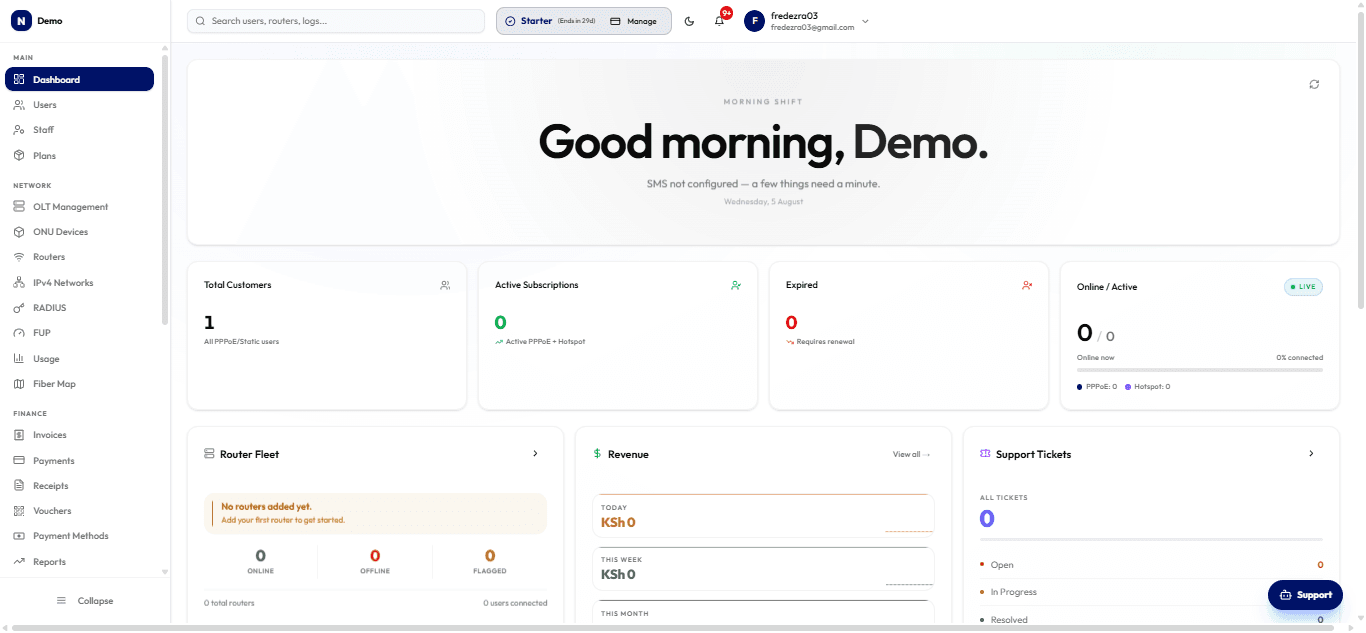
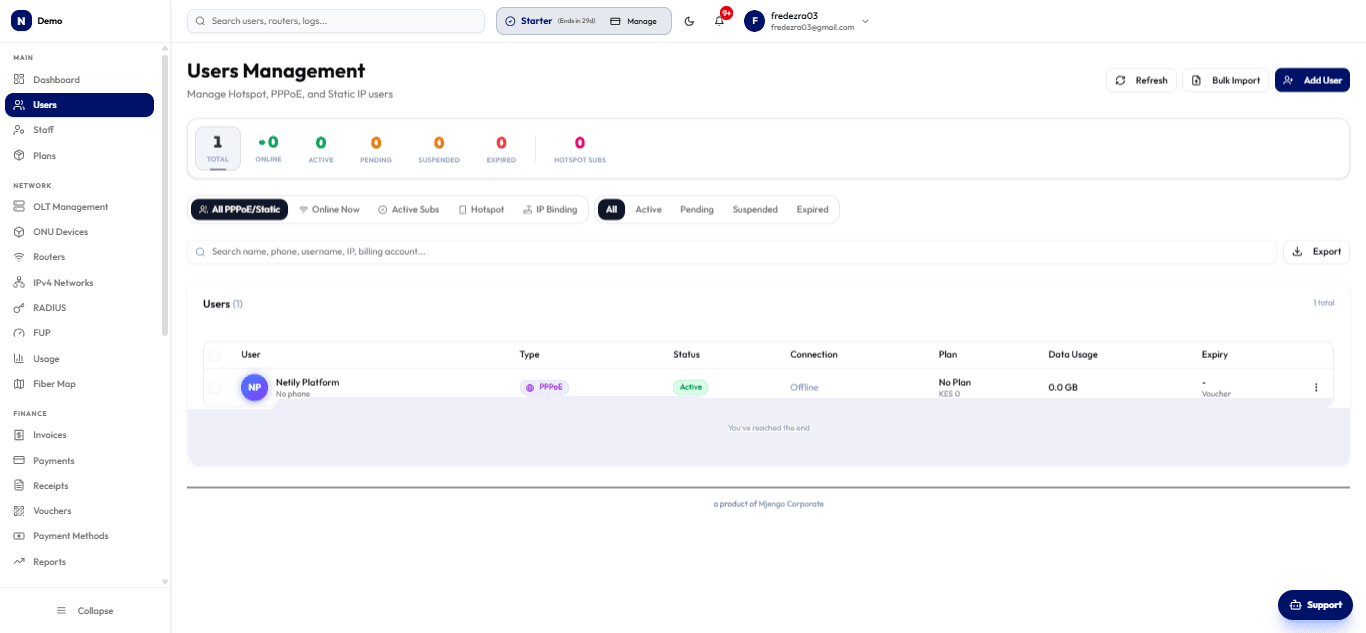
Netily removes the human step. Payments are matched to subscribers automatically, access comes back on its own, and the ISP sees revenue per router, expiring customers and network health in one dashboard. It works for PPPoE home and business connections as well as hotspot networks in hostels, estates, hotels and co-working spaces.
How Mjengo Corporate built it
We started the way we start every project: a clickable blueprint of the operator dashboard and the subscriber renewal flow, tested with ISP operators before any code. The build that followed combines MikroTik RouterOS provisioning, RADIUS authentication, M-Pesa (with or without the operator's own Daraja keys), bank and SACCO settlement, and SMS reminders. The same integrations are now available to our clients through our integration work.
What Netily does
M-Pesa auto-reconnection
A payment is matched to the subscriber and their PPPoE or hotspot access is restored automatically: no router login, no manual unblocking.
MikroTik provisioning
Routers are provisioned and managed from the dashboard, with maintenance mode and revenue per router.
PPPoE & hotspot billing
Expired PPPoE subscribers are redirected to a renewal page; returning hotspot customers reconnect while their time is valid.
Money settles to the ISP
M-Pesa with or without Daraja keys, 22 Kenyan banks and SACCOs, MTN MoMo and Airtel Money in Uganda. Netily never takes a cut of a payment.
TR-069 device management
A hosted ACS shows customer routers and ONTs next to the subscriber, so Wi-Fi changes and reboots no longer need a site visit.
Tools for growing networks
Staff roles, fair-usage policies, load balancing and failover, and SMS through any of 12 supported gateways.
Frequently asked questions
Who built Netily?
Netily (also known as Internetily) was designed and built by Mjengo Corporate, a UI/UX design and software development company in Buruburu, Nairobi. Mjengo Corporate owns and operates the product, and the Netily dashboard carries a “Built by Mjengo Corporate” footer.
Is Netily the same as Internetily?
Yes. Netily and Internetily are the same ISP billing system. The product is marketed as Internetily (Netily) at netily.co.ke, and internetily.com redirects there.
How many ISPs use Netily?
More than 50 ISPs were onboarded in Netily's first year. The product launched in November 2025 and celebrated its first anniversary in November 2026.
Can Mjengo Corporate build a billing system like Netily for my business?
Yes. The same team builds custom billing, POS, HRMS, ticketing and booking systems with M-Pesa, bank and SMS integrations. Every project starts with a clickable UI/UX blueprint so you approve the system before it is built.